Future Marketplace coming to Lahaina
September 24, 2026
September 24, 2026
"We can use this as a piko, someplace where our families can come and share a meal together or go and grab coffee." That's how Courtney Lazo, who owns the Lahaina clothing line Henōhea and lost her own storefront in the 2023 fire, described the marketplace she's helping build. Piko means center, the place everything else radiates from. It's a good word for what's happening in town this month, and a useful one for sorting out what's actually opening from what just sounds like it is.
If you've driven through Lahaina in the last few weeks, or you're planning to soon, you've probably noticed three different things happening on three different timelines, and the local coverage tends to blend them into one feel-good headline. They're not the same story. Knowing which is which will save you a wrong turn and a wrong assumption about how far along your town actually is.
The first clock belongs to the stretch of Front Street that never stopped running. The businesses clustered near the Cannery Mall on the north end, the section that survived the fire outright, have been open for a while now. Honu Oceanside is serving nightly dinner at 1295 Front Street. Coco Deck reopened as a casual neighborhood bar and kitchen at 1312 Front Street, near Kapunakea and the Cannery Mall. Star Noodle, Māla Ocean Tavern, and Aloha Mixed Plate round out that stretch. This is the part of town that was never actually gone, just cut off by road closures for a while.
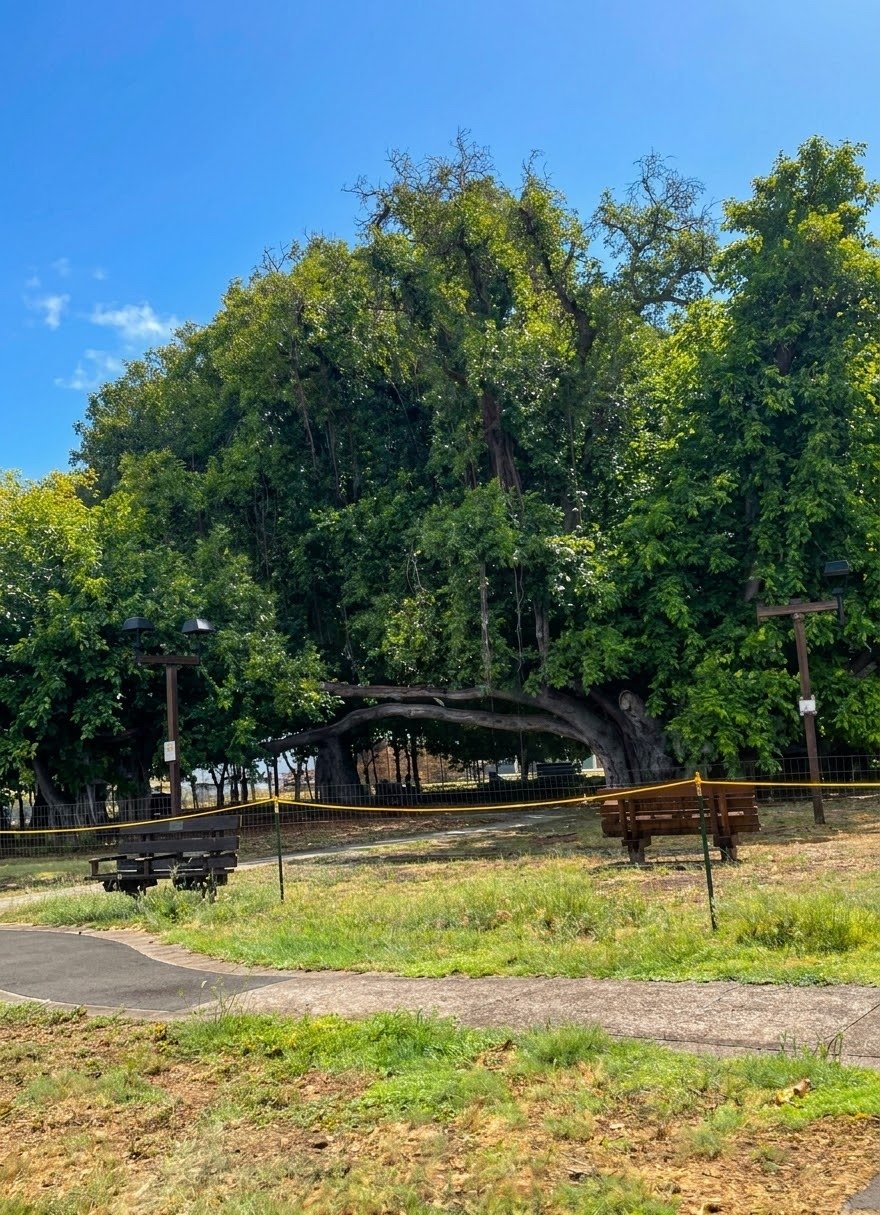
The second clock is the road itself. On August 1, 2026, the county reopened Front Street to vehicle traffic from Pāpalaua Street to Shaw Street, plus Dickenson and Prison streets. That's a real milestone and it means you can drive through instead of detouring around, but a reopened road is not the same thing as a rebuilt block. Market Street, Papelekane Street, and Mokuhinia Place are still closed, and the county hasn't set a reopening date for Banyan Tree Park.
The third clock is the one most people are actually excited about, and it's the one most likely to get misread: ʻUlu o Lele, the interim marketplace going in on the former Outlets of Maui site off Front Street. It's expected to open this month. It is not, however, a reopening of the historic Front Street storefronts. It's a new, temporary structure on a different footprint, built specifically because the real thing is still years away.
The historic commercial core, the 600 and 700 blocks of Front Street where the famous facades stood, is where the real rebuild is happening, one lot at a time, and it's moving at a pace that has nothing to do with a marketplace opening.
The Fleetwood building at 744 Front Street is the only structure still standing in the entire 700 block. At 714 Front Street, Allison Herzog, a fourth-generation landowner, is trying to rebuild her family's building as close to its original 1930s look as possible. She applied for a permit in May 2025. The last hurdle, as of this summer, was an archaeological survey, and even that has been slow going simply because there aren't enough archaeologists available to do the work. At 612 Front Street, the former home of the Pacific Whale Foundation and Maui Hands Art Gallery, property manager Ryan Churchill of Pacific Rim Land said this summer they were close to a permit and would start construction immediately after.
As of this July, the county had issued five commercial building permits for Lahaina town, with one project under construction, two more permits close behind, and more than a dozen properties still in pre-application consultation. That's the real number to watch if you want to know how close Front Street is to looking like Front Street again. It has almost nothing to do with whether the marketplace has opened.
There's a second layer to this that doesn't get talked about as much: not every original lot is coming back as a storefront at all. The county set up a buyout program for owners on the makai, or ocean-facing, side of the street who don't want to rebuild. Deputy Managing Director Erin Wade explained that owners who take the buyout have their land dedicated to open space and public access instead. So some of what fills in along the water in the next few years won't be a business at all. It'll be a park.
ʻUlu o Lele is a modest, deliberately temporary project. Hawaiian Council, the nonprofit leading it, describes it as an 18 to 24 month bridge, not a permanent fixture. The build includes 17 retail units and eight food truck spaces, plus a stage for nightly entertainment. Rents run $800 to $1,500 a month depending on unit size, subsidized in part by the Hawaiʻi Community Foundation and the County of Maui. The whole thing is funded by an $8 million initiative, including a $4 million grant from the Hawaiʻi Community Foundation's Maui Strong Fund.
Priority in vendor selection goes to businesses and cultural practitioners directly affected by the fire, but the application is open to any Maui-based business, from professional services to food vendors to a tattoo artist who's already reached out, according to organizers. If you know someone who lost a storefront or is looking for a low-cost way back into town, the window is short: vendor applications opened this month and close Monday, September 28, 2026, through uluolele.com. Submitting doesn't guarantee a spot. The Hawaiian Council expects to seat 25 to 50 vendors and sustain roughly 90 jobs during the interim period.
Mayor Richard Bissen has been careful to frame the marketplace as a starting point rather than a finish line. He's called it the first phase among many, adding that with the momentum building now, he expects to see many more commercial businesses up and running within a few years. That's an honest way to describe it. The marketplace fills a real gap while the harder, slower work of rebuilding actual Front Street buildings continues underneath it.
If you're heading into Lahaina and expecting the whole commercial district back, recalibrate. Here's a quick way to keep the three clocks straight:
None of this is a story about disappointment. It's a story about a town doing recovery in the right order, temporary first, permanent second, with people like Herzog and Churchill doing the unglamorous work of getting individual buildings through survey and permitting while the marketplace gives the town somewhere to gather in the meantime. It just means the headline you saw somewhere else, the one that made it sound like Front Street is back, is describing three different things as if they were one.
If you've got roots in Lahaina and you're weighing whether to apply for a spot at ʻUlu o Lele, or you're just trying to figure out what's actually open on your side of town before you make weekend plans, I'm always happy to talk through what I'm seeing on the ground.
Stay up to date on the latest real estate trends.

It's almost FAIR time!
Is it possible to own in Paradise?
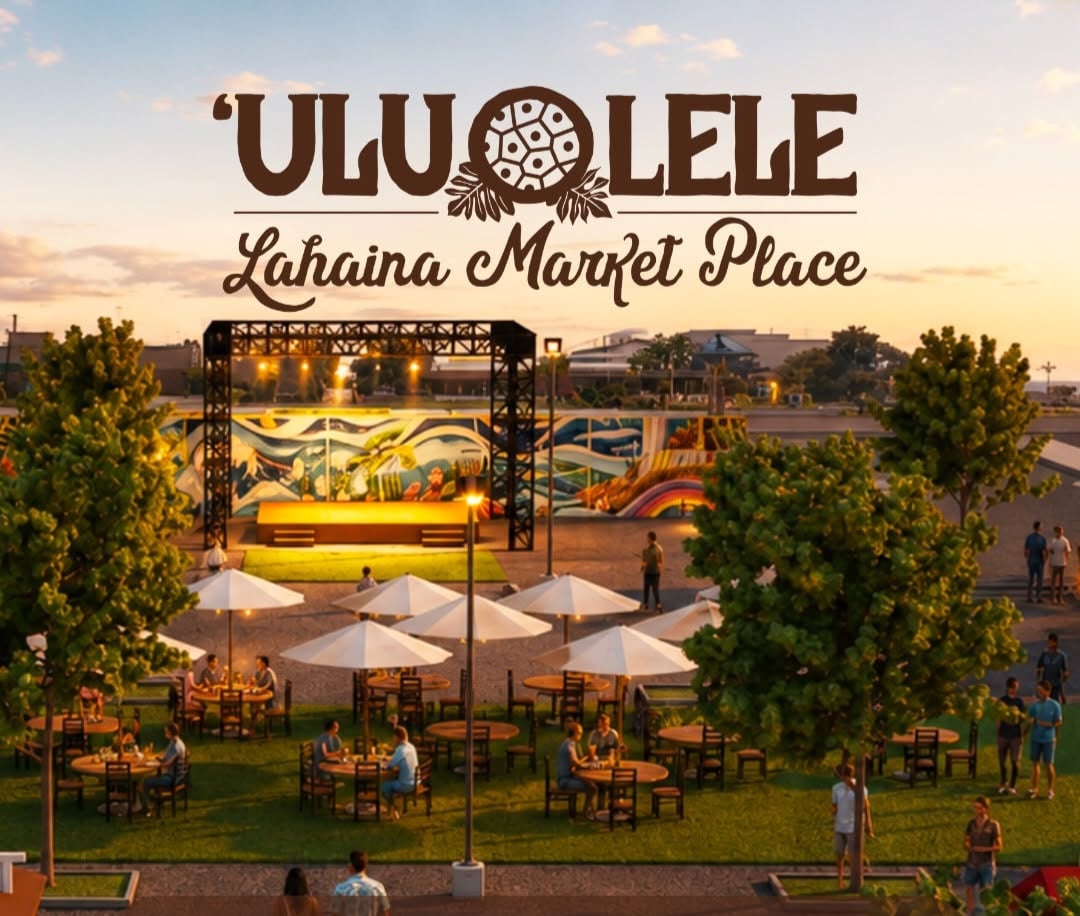
Ulu o Lele: Lahaina Market Place
From breathtaking beaches to vibrant communities, Maui offers an unmatched way of life. Explore homes that let you embrace everything the island has to offer.